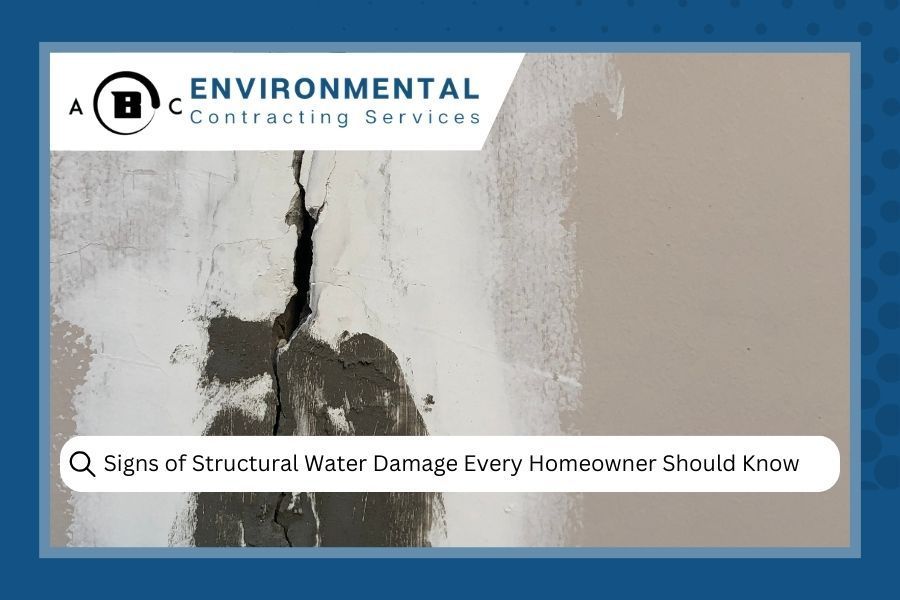
Signs of Structural Water Damage Every Homeowner Should Know
Water doesn't announce itself. It seeps in quietly, hides behind walls, and chips away at the bones of your home for months before anything looks obviously wrong. By the time you notice something alarming, the damage may already be serious. Knowing the signs of structural water damage is one of the most useful things a homeowner can do. Our team at ABC Environmental Contracting Services in Springfield has seen what happens when these warning signs get missed. A call made early is a manageable repair. A call made a year later is often a much bigger project. If you're already concerned, professional water damage restoration can stop the problem before it gets structural.
Seeing Something That Concerns You?
Don't wait on it. Our team provides free estimates within 24 hours and responds to emergencies around the clock across Springfield and the Ozarks.
Get a Free EstimateWhy Structural Water Damage Is Different
Not all water damage is the same. A water stain on the ceiling is annoying. Water that has saturated a load-bearing wall, rotted a floor joist, or caused your foundation to shift is a different situation entirely. Structural components hold your house up, and when they're compromised, you're not dealing with cosmetic repairs anymore. The IICRC's S500 Standard for Water Damage Restoration recognizes that materials like wood framing and concrete absorb water deeply and require professional drying to prevent lasting deterioration. The longer moisture stays in structural components, the worse the decay, and the more likely secondary problems like mold become. Our post on how humidity levels affect your home year-round covers more on that connection.
Warning Signs on the Outside of Your Home
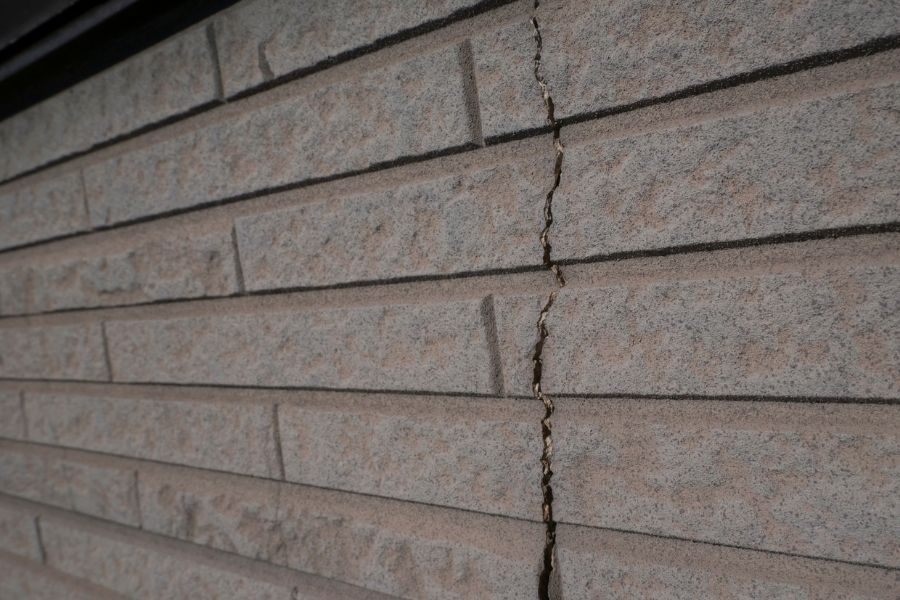
Warped or bubbling exterior siding is a signal that water is getting behind your walls and into the framing beneath.
Foundation Cracks or Staining
Horizontal foundation cracks are serious. They often indicate water-saturated soil pushing against the wall. Vertical cracks can point to settling. White mineral deposits on concrete, called efflorescence, mean water has been moving through the material, probably for a while. None of these should be patched and ignored.
Warped or Bubbling Siding
Siding that warps, separates, or feels soft underneath has been absorbing water. It's not just cosmetic. Siding protects your wall sheathing and framing, and when it fails, moisture gets a direct route into structural wood. Bubbling paint or discolored patches often appear before the siding visibly warps, so watch for those early clues.
Warning Signs on the Inside
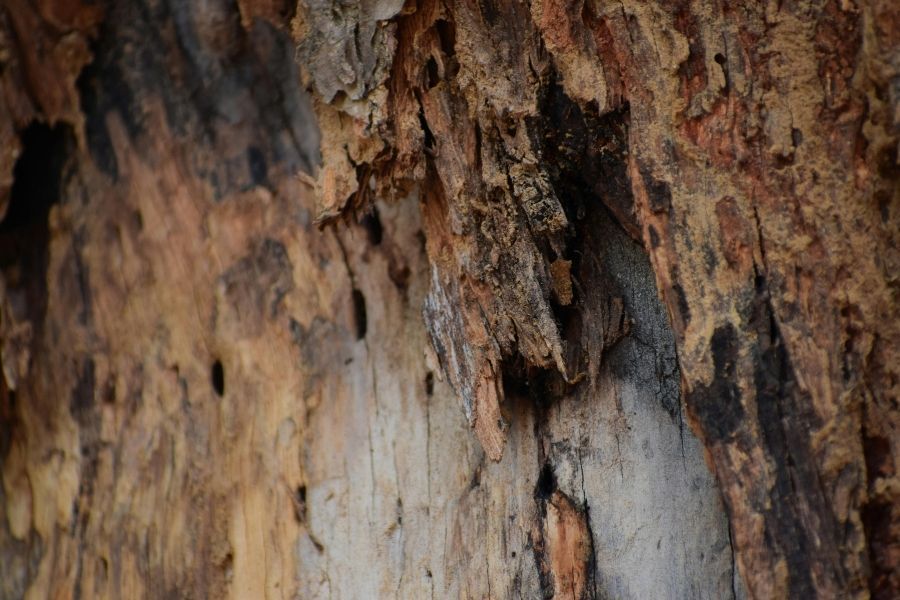
Once wood reaches this stage of rot, replacement is the only safe option. This is what untreated moisture intrusion looks like over time.
Floors That Bounce, Sag, or Give Underfoot
A floor that feels soft, dips in places, or has a noticeable bounce is showing you that the subfloor or joists underneath have absorbed moisture. Rotting joists can't support the weight they're designed for. If it's happening in one area and seems to be getting worse, don't just walk past it.
Doors and Windows That Stick
When a door or window that used to open smoothly starts sticking or won't latch correctly, the frame may have shifted. Water damage causes wood framing to swell and the structure's geometry to change with it. Combined with other signs on this list, it's a real pattern worth investigating.
Cracks in Walls or Ceilings
Diagonal cracks from the corners of windows or doors, cracks that grow over time, or ceiling cracks paired with staining all deserve attention. Not every crack is structural, but cracks that are widening or appear alongside other warning signs on this list should get a professional assessment.
Cosmetic vs. Structural: Know the Difference
| Cosmetic Damage | Structural Damage |
|---|---|
| Peeling or bubbling paint | Rotted floor joists or support beams |
| Surface water stains on drywall | Foundation cracking or bowing walls |
| Warped baseboards | Sagging or soft subfloor |
| Surface mold on drywall | Mold growing inside wall cavities or framing |
Basement and Crawl Space Red Flags
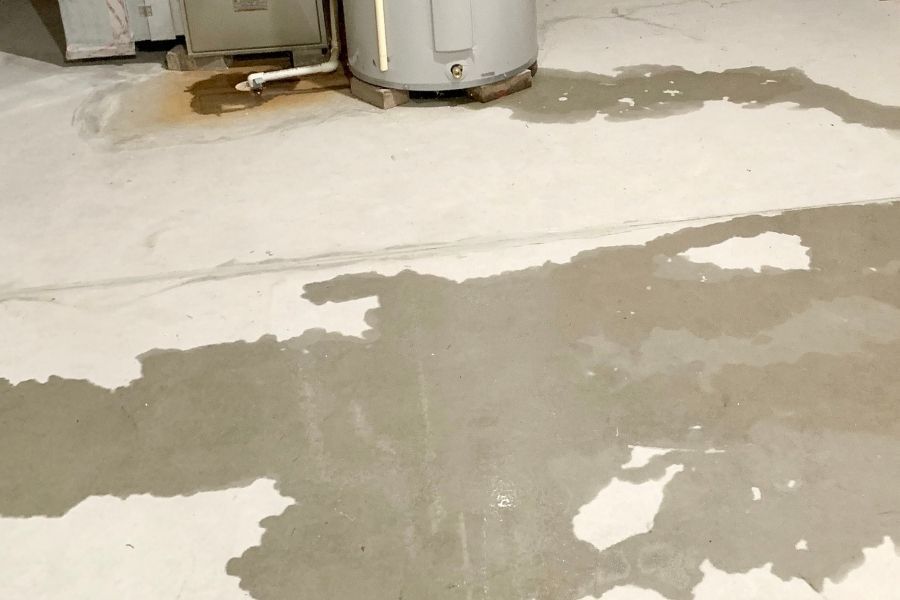
Standing water in a basement is an obvious emergency, but recurring seepage, even minor, can cause serious structural and mold problems over time.
Ozarks homes with basements and crawl spaces are especially vulnerable. Missouri's clay soil and spring rain patterns put real pressure on below-grade structures. Floor joists above a damp crawl space absorb moisture from below and can rot without you ever seeing the damage directly. Watch for musty smells, efflorescence on basement walls, rust on metal support columns, or soft ground in the crawl space. According to the EPA's guidance on mold and moisture, enclosed damp spaces are exactly where mold establishes itself fastest, and mold in structural wood accelerates decay significantly.
Quick Warning Sign Checklist
The more of these you're seeing at once, the more urgently you want a professional involved.
- Horizontal or diagonal foundation cracks
- Bowing or bulging basement walls
- Floors that sag, bounce, or feel soft
- Doors or windows sticking unexpectedly
- Warped, bubbling, or separating exterior siding
- Visible rot on exposed wood near ground level
- Persistent musty odor in the basement or crawl space
- White mineral deposits on concrete or brick
- Ceiling stains combined with cracks or soft spots
What to Do When You Spot These Signs
Take photos, note the locations, and watch whether anything looks like it's changing. Then stop trying to diagnose it yourself beyond that initial check. Structural water damage hides most of its worst effects behind finished surfaces and inside framing cavities. What's visible on the surface is usually the smaller part of the problem.
Our team at ABC Environmental Contracting Services in Springfield uses moisture meters and thermal imaging to find what the eye can't see. We've been helping homeowners across Springfield, Nixa, Branson, and the surrounding Ozarks for over 20 years. If mold is already part of the picture, professional mold remediation needs to be part of the solution. And if you're unsure how serious your situation is, our post on when to call for emergency restoration services can help you decide how fast to act.
Veteran-Owned. Family-Run. Here When It Matters.
ABC Environmental Contracting Services in Springfield offers free estimates and 24/7 emergency response. Don't let a warning sign turn into a structural crisis.
Schedule Your Free EstimateFrequently Asked Questions
How do I tell the difference between normal settling and structural water damage?
Normal settling usually produces thin, hairline vertical cracks that don't grow quickly. Structural water damage tends to create horizontal cracks, diagonal cracks from door or window corners, or cracks that visibly widen over time. It usually comes with other signs like musty odors, sticking doors, or bouncy floors. When in doubt, a professional assessment is the clearest way to find out.
Can structural water damage hide even with no visible stains or wet spots?
Yes. Water can fully saturate wood framing, insulation, and subfloor materials without producing visible staining on the surface. Professionals use thermal imaging and moisture meters to detect hidden moisture inside walls and floors. By the time staining becomes visible, damage has often been developing for a significant period.
How fast can water damage become structural?
It depends on the severity. A major pipe burst or flood can begin compromising wood framing within days if not properly dried. Slow seepage may take months or years before structural changes appear. The earlier you catch it, the better.
Should I worry about mold if I find structural water damage?
Almost always. Structural water damage means moisture has likely been in enclosed spaces for some time, which is exactly where mold thrives. Mold can begin developing within 24 to 48 hours under the right conditions. A thorough professional assessment will look for both at the same time.
Dan and Tina Benton are the owners of ABC Environmental Contracting Services, a veteran-owned restoration company serving the Springfield, MO area. Together, they bring over two decades of expertise in water damage restoration, mold remediation, and asbestos removal for both residential and commercial properties. They're committed to serving their community with integrity and dedication, providing 24/7 emergency response when disaster strikes.